Generating Enduring Revenue by Combining Surebets with Stacked Free Bet Incentives from Various British Bookmakers
Rosa Russell · Jul 20, 2026
Generating Enduring Revenue by Combining Surebets with Stacked Free Bet Incentives from Various British Bookmakers
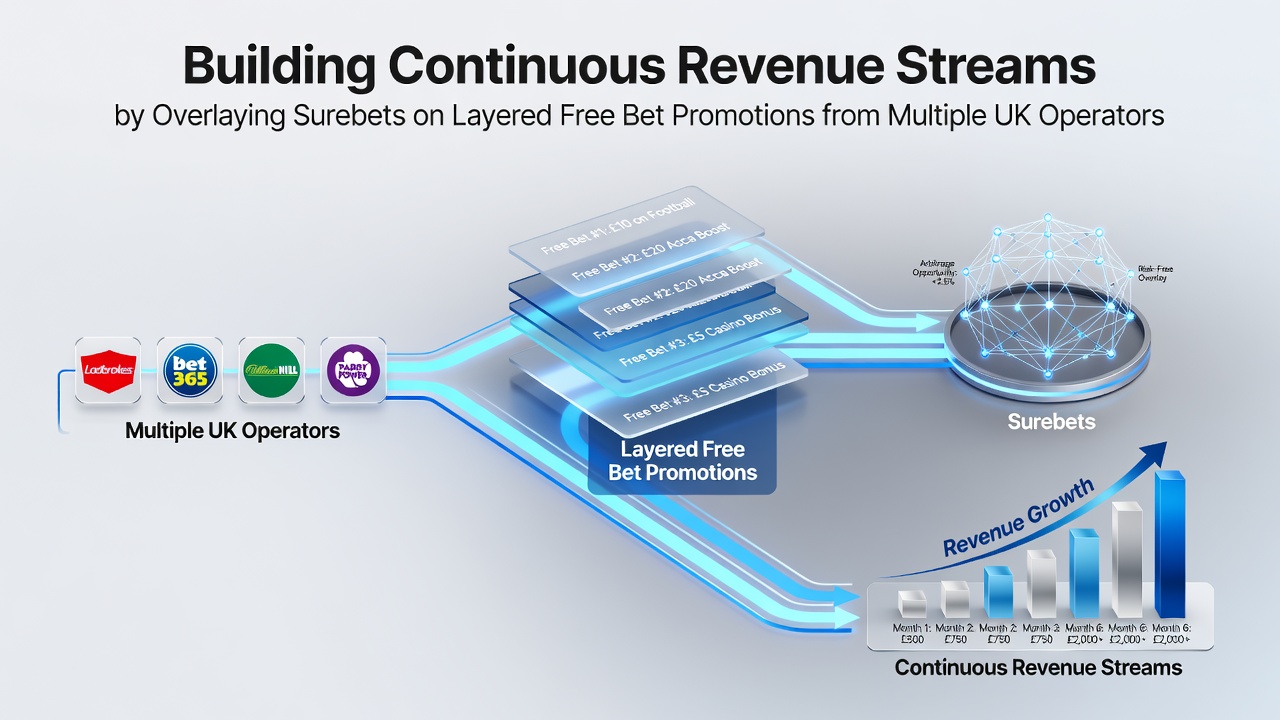
Bookmakers across Britain maintain promotional calendars that release free bet offers on a rolling basis, and some participants coordinate these incentives with surebet calculations to establish repeated cycles of activity. The approach involves identifying price discrepancies between exchanges and traditional platforms, then applying free bet credits in sequences that cover multiple events without leaving positions exposed.
Data from industry tracking services shows participation in such layered strategies has grown alongside the expansion of welcome bonuses and reload offers. Operators release these incentives at different times of the month, which creates opportunities for staggered deployment across accounts.
Core Elements of the Overlay Method
Surebets arise when odds on the same outcome differ enough between two or more platforms to guarantee a return regardless of result, while free bet promotions supply stake credits that reduce or eliminate the initial outlay on one side of the equation. When these elements combine, the free bet portion offsets the margin that would otherwise be required to balance the surebet, leaving the exchange leg as the primary risk control.
Multiple operators issue free bets with varying terms, such as minimum odds requirements or expiry windows. Observers note that selecting promotions whose conditions align with high-liquidity markets allows participants to maintain coverage across football, tennis, and horse racing fixtures that occur throughout the week.
Sequential Deployment Across Operators
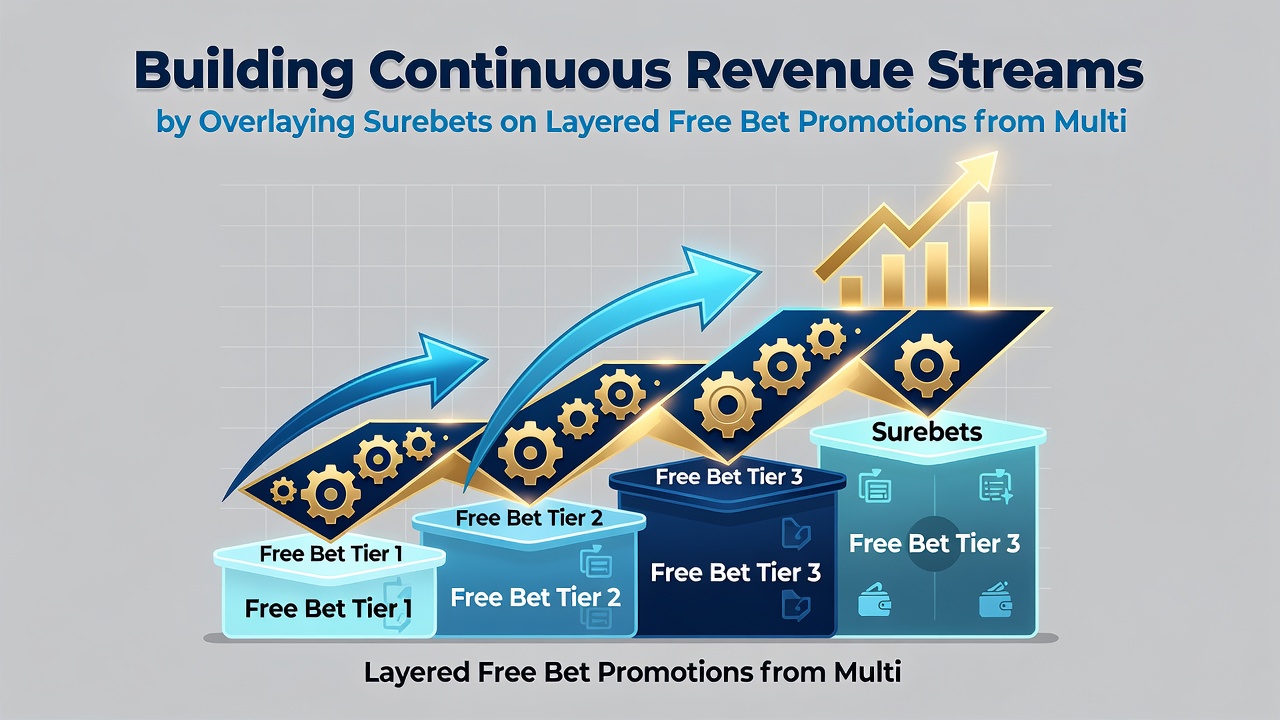
One common sequence begins with a sign-up free bet from a first operator, matched against an exchange position, followed by a reload offer from a second operator on a related event. The process repeats as new promotions appear, with each cycle using the returned stake plus any profit to fund the next layer. Research from the University of Sydney's Gambling Treatment and Research Clinic indicates that structured repetition of this type can extend activity periods when operators refresh their offers regularly.
July 2026 saw several platforms introduce mid-season reload bonuses tied to major tournaments, which extended the window for coordinated placements. Participants tracked these releases through aggregator sites and adjusted their calendars accordingly, ensuring that one free bet matured just as another became available.
Risk Controls and Account Management
Exchange positions serve as the anchor because they allow precise stake adjustments that neutralize the free bet side. Accounts must remain compliant with each operator's terms, which typically prohibit direct arbitrage detection through pattern monitoring. Those who manage multiple accounts spread activity across different payment methods and timing intervals to reduce flags.
Canadian Gaming Association reports on cross-border betting platforms highlight similar layering techniques used in regulated markets, where participants maintain separate ledgers for each operator to track expiry dates and bonus conversion rates. The same principle applies when British users coordinate offers from several domestic sites.
Market Selection Criteria
High-volume events with tight exchange spreads provide the best conditions for overlaying free bets. Tennis matches and lower-league football games often feature sufficient liquidity on exchanges while bookmakers post promotional odds that create temporary discrepancies. Participants calculate the required exchange stake first, then allocate the free bet amount to reach the target return before confirming both legs.
Promotions with no minimum odds restrictions allow greater flexibility when matching against exchange prices that sit close to even money. Those who monitor bonus ledgers daily can identify when a free bet from one operator expires at the same time a new offer activates on another platform, preserving continuity.
Conclusion
The combination of surebet mathematics with sequenced free bet incentives produces cycles that continue as long as operators maintain promotional schedules and exchanges retain liquidity on target markets. Data from academic and regulatory sources outside the UK demonstrates that structured repetition across accounts can sustain activity when participants align timing, market selection, and compliance requirements. As new offers appear each month, the framework remains available for those who track terms and coordinate positions accordingly.