Examining Overlap Opportunities in Stacked UK Betting Promotions for Sustained Returns
Blake Patterson · Jun 29, 2026

Examining Overlap Opportunities in Stacked UK Betting Promotions for Sustained Returns
UK bettors have long examined ways to combine multiple promotions from different operators into sequences that create overlapping opportunities, and recent patterns show continued interest in these approaches through June 2026 as new sign-up incentives and retention offers appear on the market. Operators release deposit matches, free bet credits, and cashback structures at staggered intervals, which allows participants to align claim windows so that one promotion's requirements feed into teh next without resetting the underlying stake positions.
Core Elements of Layered Promotions
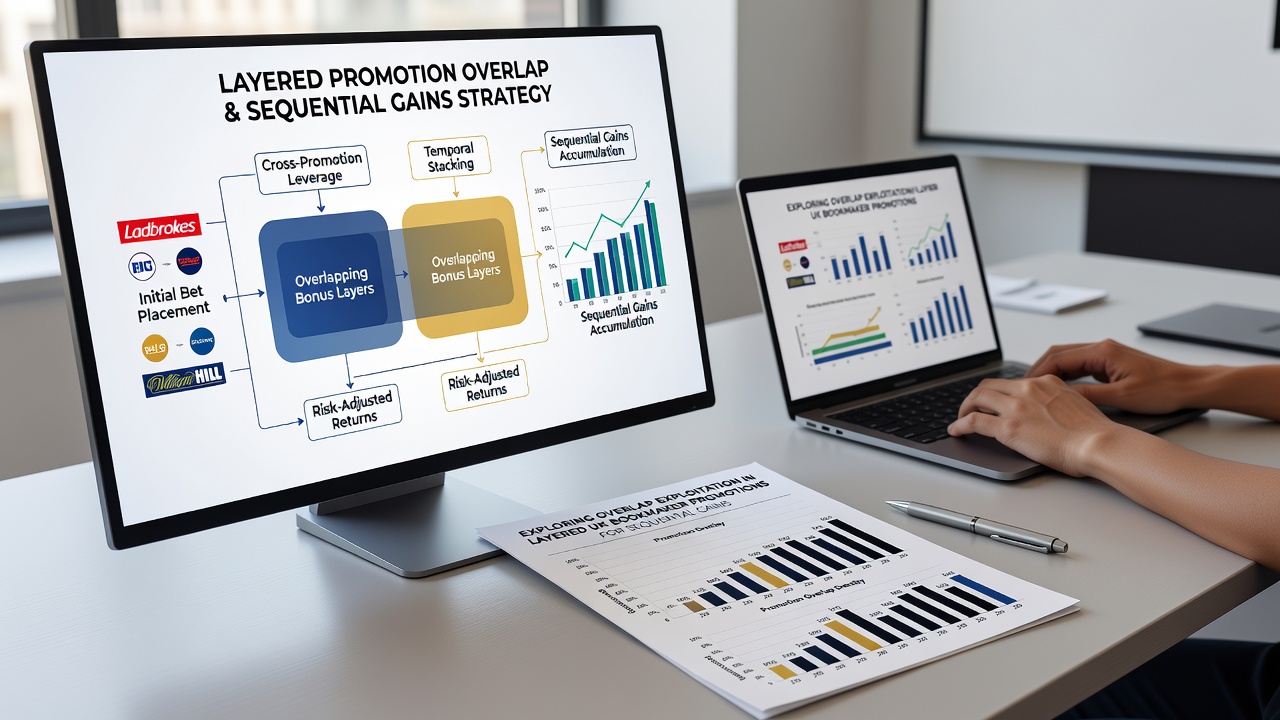
Layered promotions typically consist of an initial welcome package that includes a deposit bonus plus a separate free bet token, followed by reload offers or accumulator boosts issued in subsequent weeks. When these windows overlap, bettors can place matched positions on both sides of an event using funds from the first layer while triggering qualification criteria for the second layer, and data from industry tracking services indicates that such alignments occur most frequently during major football and horse racing calendars. Those who study these cycles note that the key lies in timing the completion of wagering requirements so that released funds or credits become available exactly when a new promotion activates.
Mechanics of Overlap Exploitation
Overlap exploitation begins with mapping the start and end dates of each bonus across multiple bookmakers, then constructing a sequence where the free bet from one site covers the lay side of a matched position on an exchange while the deposit bonus on another site funds the back side. This creates a situation where two independent promotions operate on the same underlying market outcome, and researchers tracking these patterns have observed that successful sequences often span three or four operators within a fourteen-day period. Because each promotion carries its own minimum odds and playthrough rules, the alignment requires careful calculation of stake sizes so that the net exposure remains neutral across the combined positions.
What's interesting is how operators adjust their terms in response to common sequencing methods, with some shortening the validity period of free bet tokens or adding restrictions on accumulator bets that previously allowed easier bridging between layers. In June 2026 several major brands introduced time-limited reload bonuses tied to specific events, which in turn created fresh overlap windows for those monitoring the release schedules closely. The reality is that these adjustments force participants to recalculate sequences more frequently, yet the underlying structure of deposit matches paired with risk-free tokens continues to support sequential positioning.
Practical Sequencing Examples
Take one documented approach where a bettor claims a 100% deposit match on site A, uses the matched funds to back an outcome at odds of 2.0, then simultaneously lays the same outcome on an exchange using a free bet token from site B that was claimed two days earlier. The overlap occurs because the free bet token expires later than the deposit bonus playthrough window, allowing the second promotion to complete after the first has already released its profit portion. Observers note that similar patterns repeat across cricket and tennis markets during the summer months when multiple operators run concurrent specials. Another sequence involves chaining cashback offers so that losses on an initial matched position qualify for reimbursement that then funds a third promotion's deposit requirement, effectively extending the capital cycle without additional outlay.
Regulatory and Market Context
According to reports from the European Gaming and Betting Association, promotion layering remains a focal point for compliance teams because overlapping bonuses can inadvertently breach single-account rules when participants attempt to maintain multiple profiles. Industry data compiled by the Australian Institute of Gambling Research shows comparable sequencing activity in other regulated markets, where operators respond by tightening identity verification processes and shortening bonus lifespans. Within the UK these pressures have led to more explicit terms around bonus stacking, yet sequences that stay within single-account boundaries continue to appear in public discussion forums and strategy resources.
Market Trends Through Mid-2026
By June 2026 the volume of new customer acquisition offers had increased compared with the previous year, creating more potential overlap points during the European football off-season when cricket and tennis promotions filled the calendar. Figures from operator earnings releases reveal that reload bonuses and free bet tokens now represent a larger share of marketing spend than pure deposit matches, which shifts the emphasis toward sequences that begin with a free bet rather than a funded deposit. Those tracking these shifts report that the shorter validity windows on new tokens require tighter scheduling, but the overall number of viable sequences has not declined because operators continue to release incentives on rotating schedules.
Conclusion
Overlap exploitation within layered UK bookmaker promotions follows a consistent logic of aligning claim windows, stake calculations, and market selections so that multiple incentives operate on the same positions without creating net exposure. As operators refine their terms and release schedules through 2026, participants who monitor these changes continue to identify fresh sequences that link one promotion's output directly to the next. The structure remains dependent on precise timing and adherence to each operator's rules, which in turn shapes the available opportunities at any given point in the calendar.