Cycling Bookmaker Offers with the Tennis Season for Balanced Live Positions
Finley Flores · Nov 8, 2026
Cycling Bookmaker Offers with the Tennis Season for Balanced Live Positions
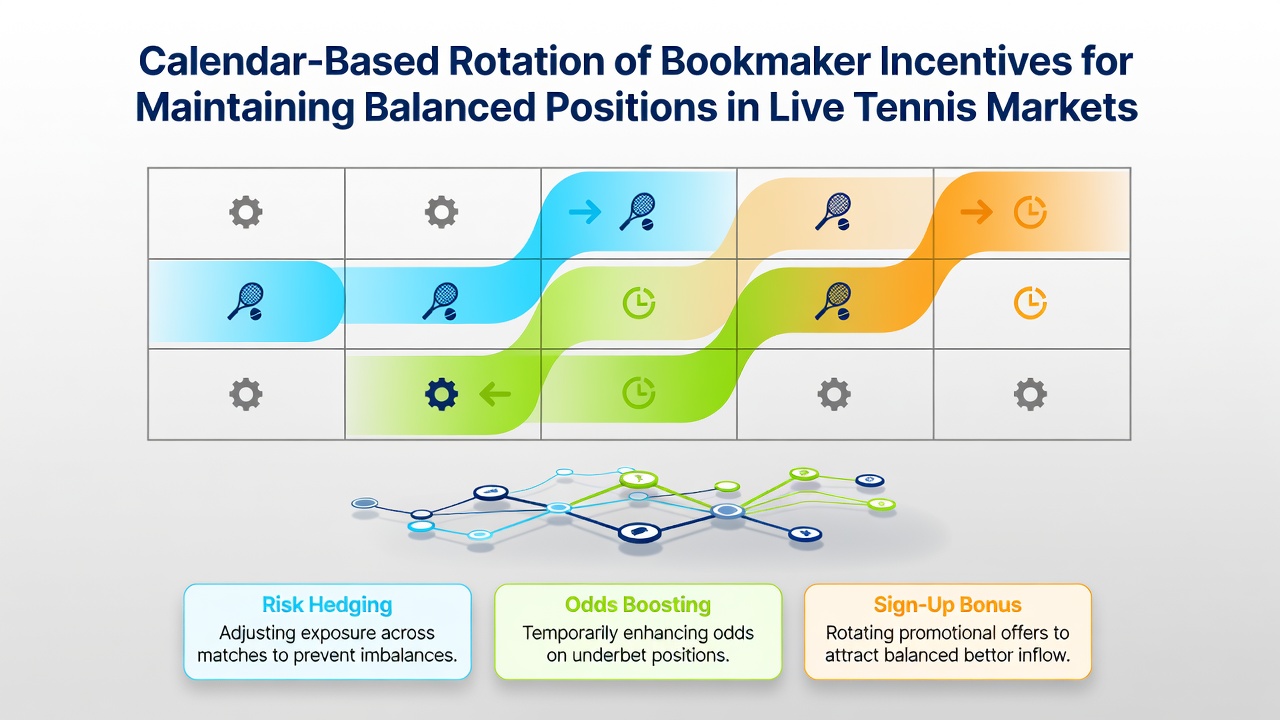
Bookmakers adjust promotional structures throughout the year to align with major tennis tournaments, and this calendar-driven approach helps operators manage liabilities in fast-moving live markets. Observers note that operators shift bonus types, enhanced odds, and cashback offers in step with events such as the Australian Open in January, the French Open in late May and early June, Wimbledon in July, and the US Open in August and September.
Data from global sports betting analytics firms shows that live tennis wagering volumes spike during these periods, creating uneven exposure on individual players or match outcomes. By rotating incentives, operators encourage betting activity on the opposing side of heavy liability positions, which reduces risk without requiring manual odds adjustments in every market.
How Tournament Schedules Influence Offer Structures
During the Australian Open swing, operators often introduce deposit-match bonuses tied to live sets or games, because early-round matches feature many lower-ranked players and produce volatile price movements. Those incentives taper off once the tournament reaches the quarterfinal stage, when established favorites draw heavier support and liability concentrates on one side of the book.
Researchers tracking operator behavior across multiple seasons found that similar patterns repeat at the clay-court majors, where slower rallies and longer points change the pace of live betting. Promotions then pivot toward cash-out features or partial profit guarantees that appeal to bettors who prefer to lock in returns mid-match rather than chase outright winners.
November 2026 ATP Finals Timing and Position Management
November brings the season-ending ATP Finals in Turin, and operators have already begun preparing incentive rotations for the eight-player round-robin format. Historical figures indicate that live markets during this event generate concentrated liability on a small number of matches, so bookmakers introduce staggered free-bet offers that activate only on specific court sessions. This timing allows firms to offset exposure built up from earlier grand-slam cycles while keeping overall margins stable.
One industry report released by the European Betting and Gaming Association highlighted how operators in several jurisdictions use the ATP Finals window to test new cashback percentages that reset weekly, aligning with the tournament's group-stage schedule. The approach spreads promotional cost across multiple days and prevents any single outcome from creating sustained imbalance.
Mechanics of Rotating Incentives Across Regions
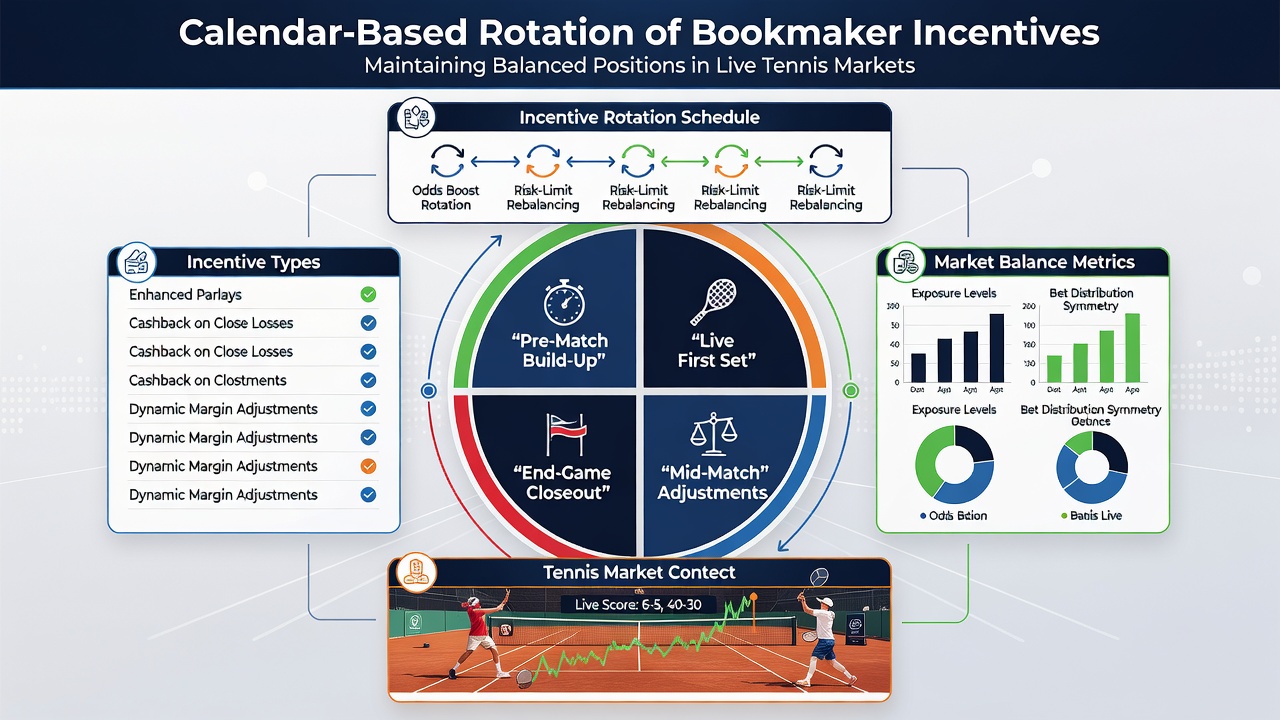
Operators in Australia, parts of Asia, and Europe coordinate different promotional calendars because local regulatory frameworks and player preferences vary. Australian-facing sites tend to emphasize bonus bets on underdogs during the early Australian swing, while European operators focus more on enhanced odds for in-play point spreads once grass-court season begins. These regional differences allow global betting groups to move liquidity between markets and maintain balanced books without relying on a single incentive type.
Studies conducted by the University of Nevada's International Gaming Institute examined how such rotations affect live-market depth. The analysis revealed that operators who refresh offers every two to three weeks during the main tour season experience lower variance in their live-tennis profit margins compared with those that maintain static promotions year-round. The findings point to improved ability to absorb sudden shifts in public betting patterns when a top seed withdraws or when weather delays alter match conditions.
Examples from Recent Tournament Cycles
Take the 2025 grass-court season as one case where operators introduced time-limited accumulator bonuses that paid out only on matches completed within a calendar week. This structure encouraged bettors to spread stakes across several fixtures rather than concentrating on marquee evening sessions. Position data collected by analytics providers showed reduced single-match liability spikes during that period.
Another observed pattern appears during the Asian swing in October, when operators roll out loyalty-point multipliers that convert into free bets for the following week's events. The rotation bridges the gap between the US Open and the ATP Finals, keeping engagement steady while gradually shifting focus toward indoor hard-court dynamics that favor different player profiles.
Conclusion
Calendar-based rotation of bookmaker incentives continues to serve as a practical tool for maintaining equilibrium in live tennis markets. By aligning promotions with the annual sequence of grand slams, Masters events, and year-end championships, operators respond to predictable volume patterns and regional differences in betting behavior. Data from multiple jurisdictions and academic reviews indicate that these structured adjustments contribute to more consistent risk management across the season. As the 2026 schedule approaches its final stages, further refinements to these rotation cycles are expected to incorporate additional variables such as player form metrics and real-time injury data.