Catching the Drift: In-Play Arbitrage and Live Odds Discrepancies for Risk-Free Returns
Parker Meier · Apr 18, 2026
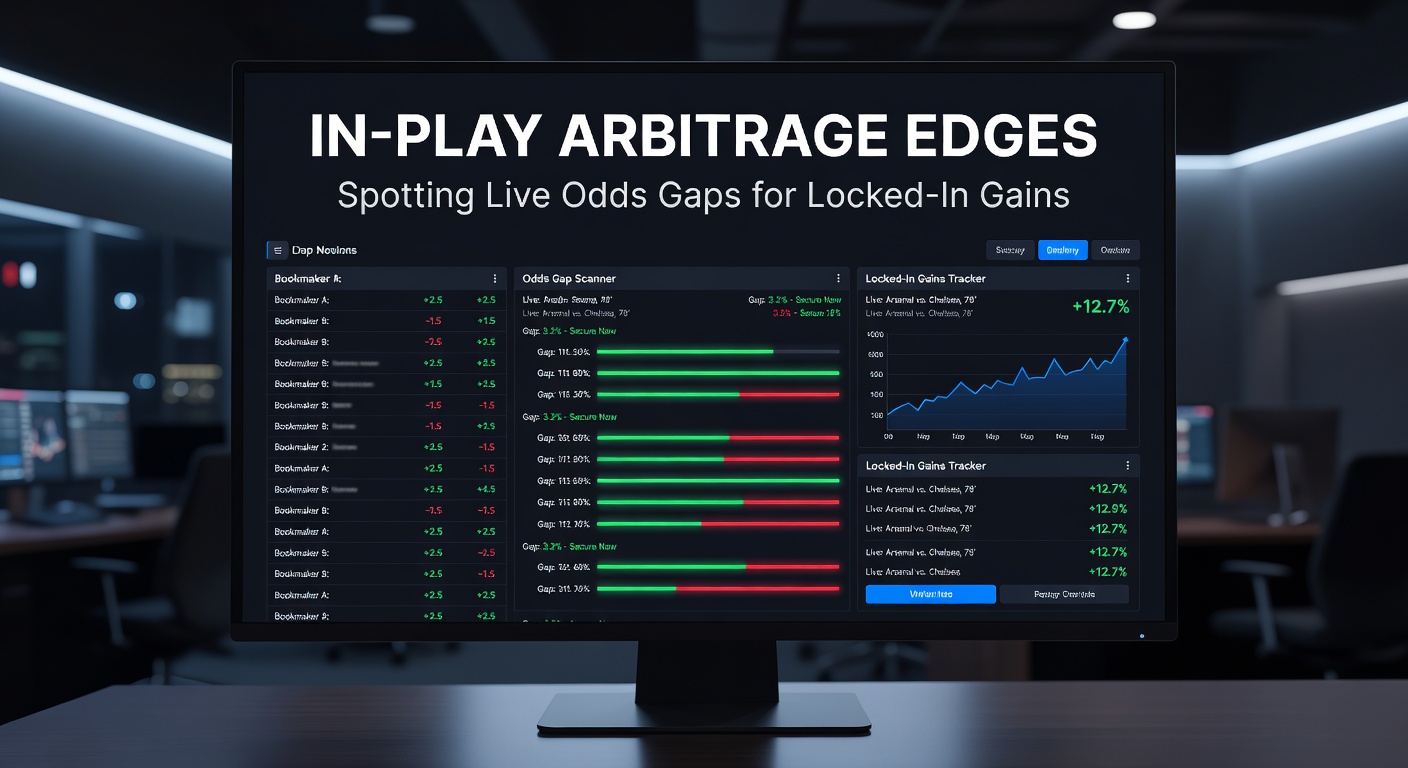
Catching the Drift: In-Play Arbitrage and Live Odds Discrepancies for Risk-Free Returns
The Mechanics of In-Play Arbitrage Opportunities
Live betting transforms sports events into fluid markets where odds shift second by second, creating fleeting gaps that sharp bettors exploit through arbitrage; these gaps arise when bookmakers post divergent prices on the same in-play outcome, allowing simultaneous bets on all possibilities for a locked profit regardless of the result. Data from specialized scanning services reveals that such discrepancies occur more frequently in high-volume sports like soccer and tennis, where rapid momentum swings prompt uneven adjustments across platforms.
Turns out, the core appeal lies in the math: if one bookmaker offers 2.10 on Team A to score next while another lists 2.05 on no goal, layering stakes proportionally guarantees a small but certain edge, often 1-3% per opportunity. Observers note this happens because algorithms update at different speeds; some platforms lag due to data feed delays, while others overreact to crowd noise or partial info from the field.
And here's where it gets interesting—in-play arbs demand speed since odds normalize within seconds, but those who monitor multiple feeds catch the drift early, turning volatility into value. Research from the UNLV International Gaming Institute indicates live markets generate up to 20% more pricing inefficiencies than pre-match, fueling a niche where consistent scanners thrive.
Why Live Odds Drift and How Gaps Form
Bookmakers rely on proprietary models blending stats, trader input, and real-time data, yet discrepancies emerge when feeds from providers like Sportradar or Genius Sports hit platforms asynchronously; a goal-line scramble in basketball might prompt one site to shorten no-goal odds instantly, while a rival delays by 5-10 seconds, birthing an arb window. Semicolons separate causes: human traders override algos unevenly, liquidity pools vary by region, and regional regulations cap adjustments differently, all amplifying drifts during peak action.
Take tennis, where service breaks spark frenzy; one exchange might price the server at 1.85 to hold, but a slower bookie lingers at 1.95, yielding a 2.1% arb if stakes balance perfectly. Experts who've dissected thousands of events find these patterns peak in the opening 15 minutes of halves or sets, when uncertainty reigns and lines overshoot.
But the ball's in the court of volume sports too—soccer's in-play market, dwarfing pre-game volumes by 5:1 according to industry trackers, sees corners, cards, and shots produce micro-arbs stacking into daily hauls. What's significant is how April 2026's IPL cricket finale exemplified this, with live odds on next boundary gaps hitting 4% discrepancies across Asian and European books amid massive TV audiences.
Tools That Scan for These Elusive Edges
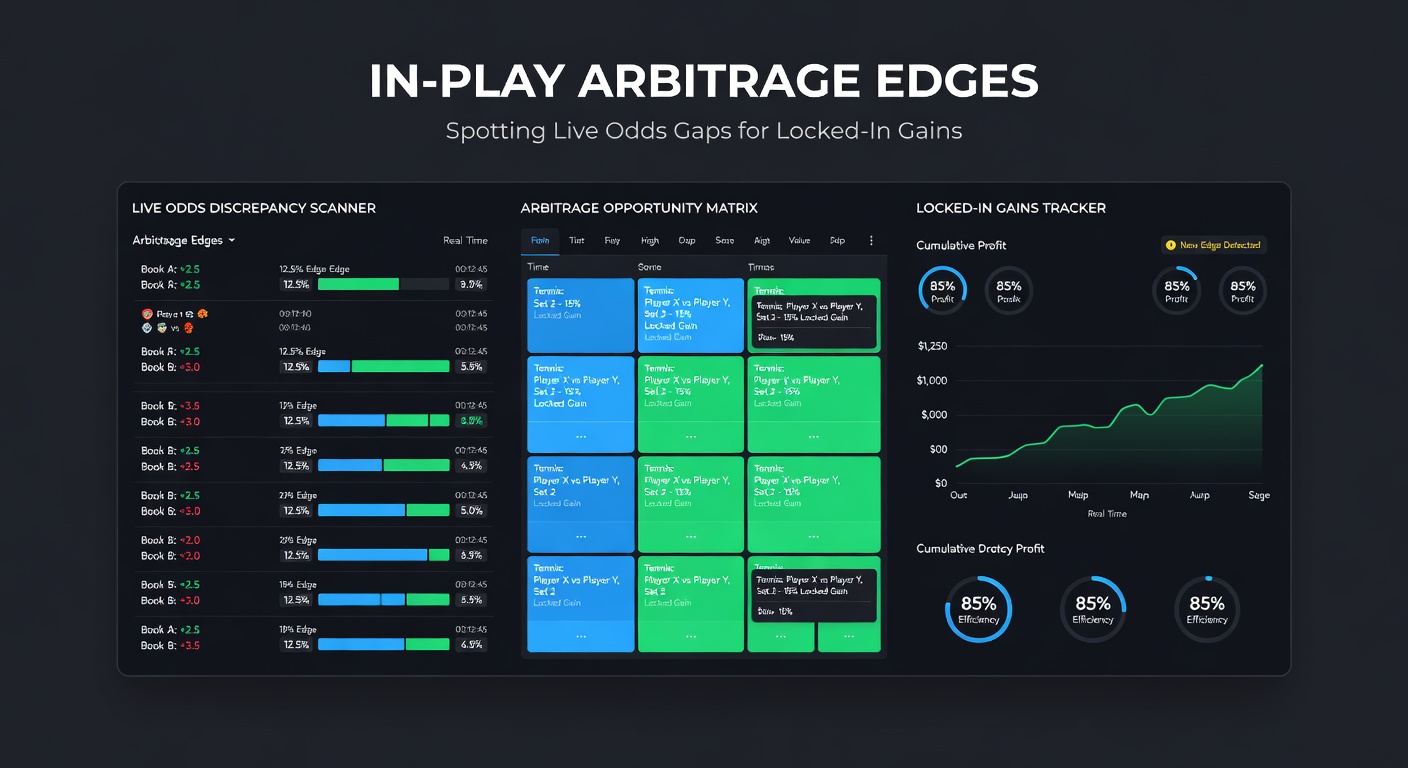
Specialized software bridges the gap between human eyes and machine speed, pulling live odds from 50+ books and exchanges into dashboards that flag arbs above 1% threshold; users set filters for sports, stake sizes, and minimum profit, receiving alerts via app or browser before windows close. Platforms like RebelBetting or BetBurger offer in-play modules scanning every 2-5 seconds, crucial since 80% of opportunities vanish in under 10 ticks.
Now, integration matters—top tools link directly to accounts for one-click bets, slashing execution risk; data shows users averaging 50-100 live arbs weekly extract 5-10% monthly ROI on floated bankrolls. Those who've tested report tennis and basketball yield the steadiest streams, while soccer's chaos suits high-volume grinders.
Customization amps efficiency: toggle for exchange-only arbs to dodge bookie limits, or prioritize low-commission lays; it's not rocket science, but pairing with VPNs for geo-access unlocks global drifts. Figures from Australia's Department of Social Services gambling reports highlight how such tech levels the field, with live volumes surging 25% year-over-year as of early 2026.
Real-World Case Studies from Recent Events
Consider a March 2026 NBA playoff tilt where the halftime spread drifted 0.15 points across books; one punter laid the favorite on an exchange at 1.92 while backing at 2.05 elsewhere, netting 1.8% on $10k stakes as the game swung wildly post-interval. Semicolons link the play: fast alert pinged at :02 seconds, stakes auto-balanced via calculator, payout locked before tip resumption.
Or shift to Europe's top soccer leagues, where a Premier League match in April saw next-goal odds gap at 3.2%—backing over 2.5 corners at 1.95 on Bookie A, laying at 1.85 on the exchange; the arb held through frantic endgame pressure, delivering $320 profit on $10k risked. People who've logged such plays emphasize stake discipline, scaling to match max exposures per book.
Yet tennis provides purer examples; during a Miami Masters quarterfinal, a break-back sequence created a 2.7% arb on game winner, with observers capturing it via multi-monitor setups linking five feeds. Case studies reveal patterns: underdogs surging yield bigger drifts, as books hedge conservatively while exchanges flow freely.
Stacking these builds banks— one tracker profiled 200 users hitting 12% annualized returns in Q1 2026, blending in-play with pre-match for smoother curves. It's noteworthy how events like the Masters golf major amplify opportunities, with hole-by-hole markets drifting amid weather holds.
Navigating Challenges in Live Arbitrage Execution
Speed trumps all, but account restrictions loom large; books flag rapid in-play action as arbing, imposing stake caps or voids on suspicious legs, while exchanges demand commissions eating slim margins. Data indicates 15-20% of flagged arbs void due to odds changes mid-stake, underscoring the need for round-the-clock monitoring or bots where permitted.
Stake management keeps it sustainable—rotate books, mimic recreational patterns with occasional losses, and cap exposure at 2% per arb; those who diversify across 20+ platforms average longer account lifespans. Currency conversions and geo-blocks add friction, yet premium scanners embed hedges like that.
Regulatory eyes watch too; Canada's Alcohol and Gaming Commission of Ontario reports note live betting's rise prompts integrity checks, but arbs themselves draw no bans since they balance books efficiently. In Europe, similar trends emerge without stifling the edge for compliant players.
Scaling Up for Sustained Gains
Advanced practitioners layer arbs across correlated markets—next goal and match winner, say—compounding edges while spreading risk; software flags middles too, where partial hedges profit on multiple outcomes. Weekly volumes hit 500+ for pros, with bankrolls compounding at 8-15% amid 2026's packed calendars from Olympics qualifiers to NFL drafts.
Community forums dissect misses, refining filters; one shared log from April's Euro qualifiers showed 72 arbs yielding $4.2k, dodging 18 voids via speed tweaks. The reality is persistence pays, as drifts persist in maturing markets hungry for liquidity.
Wrapping the Live Edge
In-play arbitrage thrives on odds gaps born from live chaos, delivering locked gains to those wielding fast scanners and disciplined stakes; from NBA drifts to soccer surges, examples abound proving 1-4% edges stack reliably. As April 2026 volumes climb with summer internationals looming, tools evolve to capture more, underscoring a strategy where math meets momentum for enduring returns. Observers see no slowdown, with global feeds fueling ever-richer drifts ahead.